 |
| On the left is Biyur (Beur) |
 |
 |
| Road to Audhan |
01.bmp) |
At Kamal Baba Shaheed's tomb                    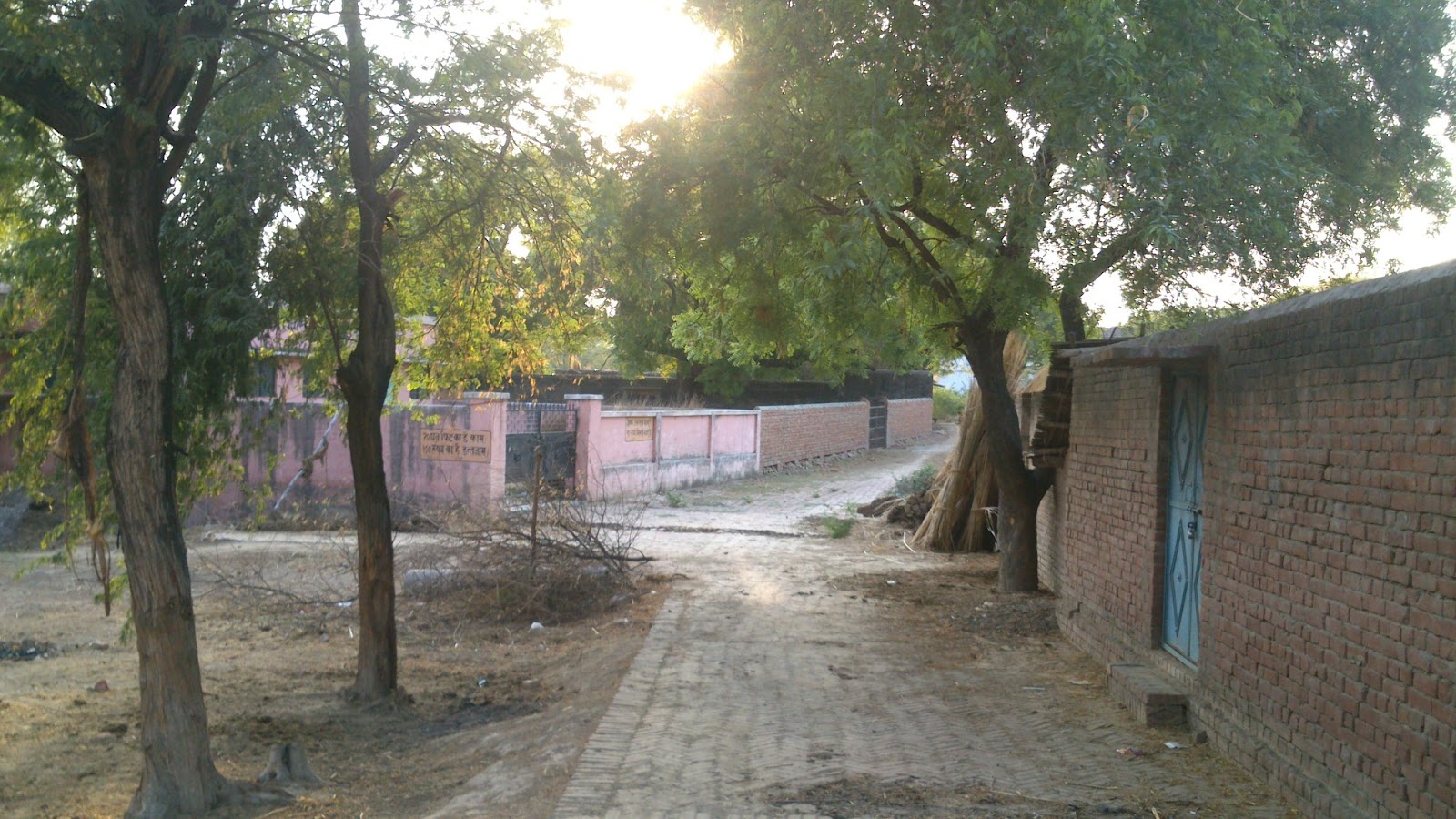   |
02.bmp) |
| The Qabr of Shaikh Fareed Shaheed and his killer |
03.bmp) |
| Primary Health Care Centre at Audhan |
04.bmp) |
| The Inscription at the Kothi built in 1889 |
05.bmp) |
| Kothi |
06.bmp) |
| Young Lads in Audhan |
07.bmp) |
| A view inside the Mosque |
08.bmp) |
| Alhamdu Shareef in the Old copy of Qur'aan |
09.bmp) |
| The Old manuscript Quraan in Audhan |
10.bmp) |
| a beautiful view over the Yamuna river |
11.bmp) |
| The village from Inside |
Audhan
Audhan is an old village situated on the banks of the River Yamuna in Block Newada Under Tehsil Chail in District Kaushambi about 19 Kms away from district Allahabad. On its east is village Biyur (Beur) and Seondha and in the west is Faridpur and Durgapur.Near By Villages are Rasoolpur Biyur(1.2 km) ,Durgapur(2 Km) ,Kadirpur Newada(2.7 km) , Amwa(3.6 km)
Origin
It is amongst the eight villages of the clan of Siddiqi Shaikhs ( Ath-gawan) descended from Hadhrat Shaikh Abu Bakr As Siddeeq Radi Allahu Anhu. It seems that the present occupants / zamindars took this village two or three hundred years ago at a time when Mughals were at the fall in India. Their complete geneaological tree is preserved here and is update from time to time. It shows one Qazi Khateeb-ud-deen as the progenitor of all the siddiqis of the eight villages as mentioned below.
History
It is an old village indeed. The remains found here alongwith the vessels and other ornaments suggest that it is a very old inhabitation , perhaps from the time of Old Vatsa region when it formed a part of the grand old Buddha regime. Large mounds with height so remarkable seem to be a part of an rampart of old mud fort . Few elderly people suggest that there passed the main route of Kosam Rajya that went to Prayag Teerth.
The advent of Siddiqi Shaikhs in this village is a recent one. It is certain that after the fall of Mughal control, about the installation of Awadh throne or a bit earlier. One Qazi Khateeb ud Deen came here from Kara( Kara Manikpur ) and settled here. Since the Qazi was a Siddiqi .The entire zamindar clan of Audhan are descended form Hadhrat Abu Bakr Siddeeq Radi Allahu Anhu through his son Abdul Rahman Bin Abi Bakr. A complete geneaological chart is available in Audhan wherein we could see very easily the names and their succesive generations.
From the Shajra I could surmise that their stay in this village is not more than 250-300 years old. Their premier ancestor Qazi Khateeb-ud-din had eight sons and one of them namely Jodawan Miyan stayed in Audhan while the rest of them migrated to different villages and polpulated them with their progeny in the subsequent years. The names of villages that are on off-shoot of the same Siddiqi family is as follows :-
ATH-GAWAN ( Eight Villages of Siddiqis in South of Chail)

Now I would write down the names of the descendents of the above mentioned gentlemen so that the readers could connect to their correct line of ascendant.
From Bakhshish Ahmad s/o Paira Miyan came Mohd Idris,Hafeez Alam,Lateef Ahmad,Mohammad Muslim , Akhtar Husain , Noor Zadah etc in Pakistan.
From Basharat Miyan are - Chhiddan Miyan,Salamuddin then Husamuddin,Rafiuddin and Sadruddin. line extinct.
From Khadeeru Miyan are - Rajab Ali , Abdul Qadir, Abdul Bari ,Mohd Isa , Nabi Ahmad, Wali Ahmad , Raziq Ali, Masihullah Shah Burzurg, Farhatullah Darogha, Hikmatullah , Iqbal Uddin, Ghayasuddin,Khaliluddin,Matinuddin, Mahboob Ahmad, Rasool Ahmad, Siraj Ahmad, Ansar Ahmad,Ikramuddin, Kareemudin, Hashim Ali, Abdul Rauf , Abdul Shakoor, Mushtaq Ahmad etc
From Ghulam Rasool were - Kabeer Hasan, Ameer Hasan, Laeeq Alam, Aulad Hasan, Safat Alam ( kanpur),
From Doondi Miyan were - Hafeezuddin, Ataullah, Samiuddin, Kabeer Ahmad, Niyaz Ullah, InayatUllah,Kamaluddin ,Nizamuddin ,Ameer Ahmad Chhiddan,Akbar Ali, Karam Ali , Nausha,Mohd Yusuf , Mohd Ayub, Habeeb Miyan ,Manzoor ul Haq , Then Farzand Ali, Lutf Ali,Hidayat Ali, Mohd Zakariya,Abdul Kareem,Abdul Raheem ,Abdul Azeez , Tajammul Husain,Waheedudin,Fazal Haq, Fayaz ul Haq, Aijaul Haq, Ali Jawwad,Nazeer Ahmad, Khursheed Ahmad,Maqbool ul Haq, Masood ul Haq, Ansar Ahmad
Nusrat Ali migrated to barethi and the famour Ghulam family is descended from him, Ghulam Rabbani , Ghulam Yazdani and the entire Ghulam family is from Nusrat Ali of Audhan.
From Fateh Ali are Kifayat Ali, Inayat Ali,Arshad Ali , Shaikh Muhammad , Raziuddin, Wakeeluddin, Mohd Fayyaz,Ashfaq Ahmad , Iftikhar Ahmad , Jan bakhsh, Abdul Samad, Abdul Ahad,Abdul Wahhab , Abdul Rauf,Tajammul Husain. Ali Ahmad , Kabeer Ahmad, Nabi Ahmad, Ausaf Ahmad, Ghufran Ahmad, Abdul Salam, Jameel Ahmad, etc.
From Gauhar Ali are - Ali Raza , Ali Jafar, Nazeer Ali, Meeran Bakhsh, Mohd Arab,Ahmad Haq, Inamul Haq etc Sahiban
The list of names are indicative and not complete. This is to connect you to your forefathers and relatives , if you wish to know more , do write to me or consult the original Shajra at Audhan.
The fourth Ancestor - Fareed Ali or Fareed Ahmad Shaheed had no issue and he died young as a martyr.
Migrations
Audhan had been a fairly large village with considerable population since its inception. A number of families migrated into Audhan to take care oftheir maternal properties. Some of the prominent ones are listed here.
1. Shamshad Ali of Audhan had no male heir. Thus his son-in-law Saiyid Abdullah of Kashia migrated to Audhan and settled here. His son was Saiyid Ahmad’ullah and their sons Ishrat Ullah, Sibghat’Ullah and ObaidUllah are still connected with the village.
2. Hasan Raza of Audhan had no male child with three daughters. His daughter’s sons came and settled in Audhan. Firstly Jb. Habeebuddin of Saiyid Sarawan came here , his grand sons were Mahboob Ahmad Subban and Zain ul Abidin. This family still owns land in Audhan.Hasan Raza's other daughter was married to Nazeeruddin Saiyid Sarawan and his and then Hakeemuddin and his son is Zameeruddin Malik at London.
3. Another daughter of Hasan Raza was married to Siraj ul Haq of Ratgaha.His sons were Nawab Husain and Imam Husain. Nawab Husains descendents are in Pakistan ,Zubair Ahmad and Zuhair Ahmad etc.
4. Imam Husain’s sons were Zafeer Ahmad, Safeer Ahmad, Taskheer Ahmda and Tauqeer Ahmad, except Zafeer Ahmad all migrated to Pakistan. Zafeer’s sons still hold land and house in Audhan
5. Again the daughter of Imam Miyan namely Safia Bibi was adopted by Rafiuddin and Khalli Bua of Audhan and thus she settled here with her husband Ishtiyaq Ahmad of Asrawe Khurd. Hence a family of Asrawe is residing and have properties in Audhan as on date.
Zamindari
The principal family /landowners of Audhan were the Siddiqi Shaikhs wo held in Zamindari almost sixteen Annas of share in Audhan proper and several villages (Mazra) around Audhan between 1700-1857. As per the local standing, the Shaikhs of Audhan were held high and known to be mild tempered and gentle-natured guys.
General Condition
Audhan was known to be a village of Hukama ( Hakeems ) Ulama ( Aalim ) and educated young brats in the beginning of twentieth century. The youth of Audhan was far more progressive and vibrant than their other brethren in the Pargana. There used to be a Literary Club, Footbal Club, Friends society in Audhan way back in 1920s and 30s.Mushairas were held and social life was quite vivacious.
Faridis of Audhan
There is another illustrious family in audhan who suffix their names with Faridi. They are certainly not from the stock of the Siddiqi Shaikhs of Audhan but they have been here for at least 200 years from now and did well in their respective careers.
Upon enquiry , it transpires that Shaikh Laal Muhammmad from Nindaura (a place near Lalganj in Partabgarh) had come and settled here. He had eight sons and thus called Ath Bhayyan namely 1.Safdar Ali 2.Qadir Bakhsh 3.Nadir Ali 4.Afzal Ali 5.Sabit Ali 6.Abdul Wahid 7.Maulvi Deputy Abdul Ghafoor 8. Abdul Lateef.
The descendents of these 8 gentleman are those who use Faridi with their name. Their origin and reason of migration is obscure.However this family is a talented one and produced a good number of Ulama and Hukama (Hakeem hazrat) in the past century. Uncha , Kothi and Bangla the three landmarks in Audhan are built and owned the Faridis.
Deputy Abdul Ghafoor was a Khan Bahaur and a major land holder of his time. Sabit Ali was a Numberdar, Afzal Ali was a Jema'daar in Agra, Nadir Ali was a Naib Nazir in Agra Cant, Qadir Bakhsh was a Tahsildar in Bharatpur and Abdul wahid was a Mukhtar (pleader).
As per the gazetteer of Allahabad (1911), during the last century the biggest zamindar from Audhan was Khan Bahadur Maulvi Abdul Ghafoor, Deputy Collector who was employed in Riyasat Reewa and earned his fortune through hard work and honesty. His constructed a Bangla (Bungalow) in 1889 and a Rauza (Rectangular grave yard compound) in honor of Shaikh Fareed ,a Scion of Shaikhs of Audhan.
Shaikh Fareed, a resident of Audhan and a officer in the Mughal Government, was known to be a highly principled and a pious person; he was attacked with dagger while offering Salat by some jealous and green-eyed person. After being injured, Shaikh Fareed retreated to his native Audhan and told his family members that someone has tried to kill him with dagger and while he would not survive, the killer would also come in self-reproach and would die in few days please do not try to retaliate and instead bury him beside my grave. The events followed were exactly true as Shaikh Fareed had foretold. Today we see that the graves of Shaikh Fareed and his killer both are at a same place, now known as Rauza.
Amongst the divines and godly people of Audhan was one Shah Maseeh'ullah Alias Chhanga Shah ,who was a Majzoob Buzurg and lived some sixty years ago, He was very famous and migrated to Gwalior in 1930s and his tomb is highly revered in Gwalior atop a rock cliff. It is reported that the last Maharaja of Gwalior was born after his prayers. The royal family takes care of his tomb.
The earliest tomb of a shaheed in Audhan is of Baba Kamaluddin who seems to be a part of Salar Masud’s army and whose body is buried here while his head is told be fallen off during a fight in Ujhini (A village on the banks of Ganges (Ganga). He is highly venerated for the past so many centuries !
In the later period Ishtiyaq Baba of Audhan was a famous mystic who was known as a wandering mystic and would land in anyone's place without any prior intimation. He was associated with the Ganj Muraabad silsila .He died in Bombay and is buried there.
When I visited Audhan last I met a few young guys who were very interested in exploring the their roots and wanted to dig out history of their village. When I went to the mosque to offer Zuhr salat , I was shown a beautifully hand written copy of Qur’an which had been preserved in the mosque for the last three or four hundred years , I am attaching the photograph of the first few pages of that Quran for your view. Masha Allah.
Since Audhan is located at an high altitude, it has a panoramic view of the river Yamuna and across. Legend has it that Audhan is the last one to be inundated in a flood and if Audhan submerges then Allahabad cannot survive the wrath of the flood.
Audhan has a special connection with me as my maternal grandfather Late Safat Alam Sahab belonged to this village. While I write these lines I miss him a lot as he would have been so happy to know about my effort. He used to tell me a lot of things and would recite a verse as follows…………..
Yaadgar-i-Zamana hain hum log ! ! !
Sun Rakho tum, Fasana hain hum log !
How true it is that he virtually became a afsana (legend) now,I don’t find people like him now and even in older generation there is not even a glimpse of him. Those were the different lot and entirely different stock which they don’t make now. Allah Bas Baqi Hawas.
It is an old village indeed. The remains found here alongwith the vessels and other ornaments suggest that it is a very old inhabitation , perhaps from the time of Old Vatsa region when it formed a part of the grand old Buddha regime. Large mounds with height so remarkable seem to be a part of an rampart of old mud fort . Few elderly people suggest that there passed the main route of Kosam Rajya that went to Prayag Teerth.
The advent of Siddiqi Shaikhs in this village is a recent one. It is certain that after the fall of Mughal control, about the installation of Awadh throne or a bit earlier. One Qazi Khateeb ud Deen came here from Kara( Kara Manikpur ) and settled here. Since the Qazi was a Siddiqi .The entire zamindar clan of Audhan are descended form Hadhrat Abu Bakr Siddeeq Radi Allahu Anhu through his son Abdul Rahman Bin Abi Bakr. A complete geneaological chart is available in Audhan wherein we could see very easily the names and their succesive generations.
From the Shajra I could surmise that their stay in this village is not more than 250-300 years old. Their premier ancestor Qazi Khateeb-ud-din had eight sons and one of them namely Jodawan Miyan stayed in Audhan while the rest of them migrated to different villages and polpulated them with their progeny in the subsequent years. The names of villages that are on off-shoot of the same Siddiqi family is as follows :-
ATH-GAWAN ( Eight Villages of Siddiqis in South of Chail)
- Audhan - The prinicpal village.
- Seondha - The Shaikhs of Seondha
- Akbarpur - A Village close to Kasenda , was an important village earlier. No family now.
- Beur - The Shaikhs of Beur , the Chaudharis of Beur are from this family.
- Barethi - The Shaikhs of Barethi are also an offshoot of this family.
- Makhaupur- The Zamindars of Makhaupur are also siddiqi from the same root.
- Kath Gaon - The Chaudharis /shaikhs of Kath Gaon are also from the same stem.
- Muhammadpur Gaura - Line found in Barethi & Pawan

From Bakhshish Ahmad s/o Paira Miyan came Mohd Idris,Hafeez Alam,Lateef Ahmad,Mohammad Muslim , Akhtar Husain , Noor Zadah etc in Pakistan.
From Basharat Miyan are - Chhiddan Miyan,Salamuddin then Husamuddin,Rafiuddin and Sadruddin. line extinct.
From Khadeeru Miyan are - Rajab Ali , Abdul Qadir, Abdul Bari ,Mohd Isa , Nabi Ahmad, Wali Ahmad , Raziq Ali, Masihullah Shah Burzurg, Farhatullah Darogha, Hikmatullah , Iqbal Uddin, Ghayasuddin,Khaliluddin,Matinuddin, Mahboob Ahmad, Rasool Ahmad, Siraj Ahmad, Ansar Ahmad,Ikramuddin, Kareemudin, Hashim Ali, Abdul Rauf , Abdul Shakoor, Mushtaq Ahmad etc
From Ghulam Rasool were - Kabeer Hasan, Ameer Hasan, Laeeq Alam, Aulad Hasan, Safat Alam ( kanpur),
From Doondi Miyan were - Hafeezuddin, Ataullah, Samiuddin, Kabeer Ahmad, Niyaz Ullah, InayatUllah,Kamaluddin ,Nizamuddin ,Ameer Ahmad Chhiddan,Akbar Ali, Karam Ali , Nausha,Mohd Yusuf , Mohd Ayub, Habeeb Miyan ,Manzoor ul Haq , Then Farzand Ali, Lutf Ali,Hidayat Ali, Mohd Zakariya,Abdul Kareem,Abdul Raheem ,Abdul Azeez , Tajammul Husain,Waheedudin,Fazal Haq, Fayaz ul Haq, Aijaul Haq, Ali Jawwad,Nazeer Ahmad, Khursheed Ahmad,Maqbool ul Haq, Masood ul Haq, Ansar Ahmad
Nusrat Ali migrated to barethi and the famour Ghulam family is descended from him, Ghulam Rabbani , Ghulam Yazdani and the entire Ghulam family is from Nusrat Ali of Audhan.
From Fateh Ali are Kifayat Ali, Inayat Ali,Arshad Ali , Shaikh Muhammad , Raziuddin, Wakeeluddin, Mohd Fayyaz,Ashfaq Ahmad , Iftikhar Ahmad , Jan bakhsh, Abdul Samad, Abdul Ahad,Abdul Wahhab , Abdul Rauf,Tajammul Husain. Ali Ahmad , Kabeer Ahmad, Nabi Ahmad, Ausaf Ahmad, Ghufran Ahmad, Abdul Salam, Jameel Ahmad, etc.
From Gauhar Ali are - Ali Raza , Ali Jafar, Nazeer Ali, Meeran Bakhsh, Mohd Arab,Ahmad Haq, Inamul Haq etc Sahiban
The list of names are indicative and not complete. This is to connect you to your forefathers and relatives , if you wish to know more , do write to me or consult the original Shajra at Audhan.
The fourth Ancestor - Fareed Ali or Fareed Ahmad Shaheed had no issue and he died young as a martyr.
Migrations
Audhan had been a fairly large village with considerable population since its inception. A number of families migrated into Audhan to take care oftheir maternal properties. Some of the prominent ones are listed here.
1. Shamshad Ali of Audhan had no male heir. Thus his son-in-law Saiyid Abdullah of Kashia migrated to Audhan and settled here. His son was Saiyid Ahmad’ullah and their sons Ishrat Ullah, Sibghat’Ullah and ObaidUllah are still connected with the village.
2. Hasan Raza of Audhan had no male child with three daughters. His daughter’s sons came and settled in Audhan. Firstly Jb. Habeebuddin of Saiyid Sarawan came here , his grand sons were Mahboob Ahmad Subban and Zain ul Abidin. This family still owns land in Audhan.Hasan Raza's other daughter was married to Nazeeruddin Saiyid Sarawan and his and then Hakeemuddin and his son is Zameeruddin Malik at London.
3. Another daughter of Hasan Raza was married to Siraj ul Haq of Ratgaha.His sons were Nawab Husain and Imam Husain. Nawab Husains descendents are in Pakistan ,Zubair Ahmad and Zuhair Ahmad etc.
4. Imam Husain’s sons were Zafeer Ahmad, Safeer Ahmad, Taskheer Ahmda and Tauqeer Ahmad, except Zafeer Ahmad all migrated to Pakistan. Zafeer’s sons still hold land and house in Audhan
5. Again the daughter of Imam Miyan namely Safia Bibi was adopted by Rafiuddin and Khalli Bua of Audhan and thus she settled here with her husband Ishtiyaq Ahmad of Asrawe Khurd. Hence a family of Asrawe is residing and have properties in Audhan as on date.
The principal family /landowners of Audhan were the Siddiqi Shaikhs wo held in Zamindari almost sixteen Annas of share in Audhan proper and several villages (Mazra) around Audhan between 1700-1857. As per the local standing, the Shaikhs of Audhan were held high and known to be mild tempered and gentle-natured guys.
General Condition
Audhan was known to be a village of Hukama ( Hakeems ) Ulama ( Aalim ) and educated young brats in the beginning of twentieth century. The youth of Audhan was far more progressive and vibrant than their other brethren in the Pargana. There used to be a Literary Club, Footbal Club, Friends society in Audhan way back in 1920s and 30s.Mushairas were held and social life was quite vivacious.
Faridis of Audhan
There is another illustrious family in audhan who suffix their names with Faridi. They are certainly not from the stock of the Siddiqi Shaikhs of Audhan but they have been here for at least 200 years from now and did well in their respective careers.
Upon enquiry , it transpires that Shaikh Laal Muhammmad from Nindaura (a place near Lalganj in Partabgarh) had come and settled here. He had eight sons and thus called Ath Bhayyan namely 1.Safdar Ali 2.Qadir Bakhsh 3.Nadir Ali 4.Afzal Ali 5.Sabit Ali 6.Abdul Wahid 7.Maulvi Deputy Abdul Ghafoor 8. Abdul Lateef.
The descendents of these 8 gentleman are those who use Faridi with their name. Their origin and reason of migration is obscure.However this family is a talented one and produced a good number of Ulama and Hukama (Hakeem hazrat) in the past century. Uncha , Kothi and Bangla the three landmarks in Audhan are built and owned the Faridis.
Deputy Abdul Ghafoor was a Khan Bahaur and a major land holder of his time. Sabit Ali was a Numberdar, Afzal Ali was a Jema'daar in Agra, Nadir Ali was a Naib Nazir in Agra Cant, Qadir Bakhsh was a Tahsildar in Bharatpur and Abdul wahid was a Mukhtar (pleader).
As per the gazetteer of Allahabad (1911), during the last century the biggest zamindar from Audhan was Khan Bahadur Maulvi Abdul Ghafoor, Deputy Collector who was employed in Riyasat Reewa and earned his fortune through hard work and honesty. His constructed a Bangla (Bungalow) in 1889 and a Rauza (Rectangular grave yard compound) in honor of Shaikh Fareed ,a Scion of Shaikhs of Audhan.
Shaikh Fareed, a resident of Audhan and a officer in the Mughal Government, was known to be a highly principled and a pious person; he was attacked with dagger while offering Salat by some jealous and green-eyed person. After being injured, Shaikh Fareed retreated to his native Audhan and told his family members that someone has tried to kill him with dagger and while he would not survive, the killer would also come in self-reproach and would die in few days please do not try to retaliate and instead bury him beside my grave. The events followed were exactly true as Shaikh Fareed had foretold. Today we see that the graves of Shaikh Fareed and his killer both are at a same place, now known as Rauza.
Amongst the divines and godly people of Audhan was one Shah Maseeh'ullah Alias Chhanga Shah ,who was a Majzoob Buzurg and lived some sixty years ago, He was very famous and migrated to Gwalior in 1930s and his tomb is highly revered in Gwalior atop a rock cliff. It is reported that the last Maharaja of Gwalior was born after his prayers. The royal family takes care of his tomb.
 |
| Mazar of Hazrat Maseeh Shah Sahib in Gwalior |
In the later period Ishtiyaq Baba of Audhan was a famous mystic who was known as a wandering mystic and would land in anyone's place without any prior intimation. He was associated with the Ganj Muraabad silsila .He died in Bombay and is buried there.
 |
| Mazar of Ishtiaq Baba of Auhan in Bombay (Courtesy Br.Faiz Alam ) |
When I visited Audhan last I met a few young guys who were very interested in exploring the their roots and wanted to dig out history of their village. When I went to the mosque to offer Zuhr salat , I was shown a beautifully hand written copy of Qur’an which had been preserved in the mosque for the last three or four hundred years , I am attaching the photograph of the first few pages of that Quran for your view. Masha Allah.
Since Audhan is located at an high altitude, it has a panoramic view of the river Yamuna and across. Legend has it that Audhan is the last one to be inundated in a flood and if Audhan submerges then Allahabad cannot survive the wrath of the flood.
Audhan has a special connection with me as my maternal grandfather Late Safat Alam Sahab belonged to this village. While I write these lines I miss him a lot as he would have been so happy to know about my effort. He used to tell me a lot of things and would recite a verse as follows…………..
Yaadgar-i-Zamana hain hum log ! ! !
Sun Rakho tum, Fasana hain hum log !
How true it is that he virtually became a afsana (legend) now,I don’t find people like him now and even in older generation there is not even a glimpse of him. Those were the different lot and entirely different stock which they don’t make now. Allah Bas Baqi Hawas.
Safar hai shart Musafir Nawaz Bahuterey !
Hazarha Shajar -i-Saya-dar Raah mein hain !!
Khalid Bin Umar - New Delhi


